8 Waterhouse Cross Stitch Patterns: Bridging Victorian Artistry and Modern Creative Workflows
In an era defined by rapid digital acceleration and screen-dominated lifestyles, a quiet but significant counter-movement is reshaping how professionals and enthusiasts approach creativity. The resurgence of tactile hobbies has moved beyond simple nostalgia; it has evolved into a strategic tool for mental well-being, brand storytelling, and the preservation of artistic heritage. At the forefront of this movement is the 8 Waterhouse Cross Stitch Patterns collection, a curated set that transforms the timeless masterpieces of John William Waterhouse into accessible, high-fidelity counted cross-stitch projects.
This article explores not just the aesthetic appeal of these patterns, but their relevance in the modern creative economy. By examining the intersection of historical art, digital distribution, and the human need for tangible creation, we uncover why a collection featuring works like The Lady of Shalott and Ophelia is capturing the attention of makers, marketers, and entrepreneurs alike.
Defining the Collection: From Canvas to Thread
The 8 Waterhouse Cross Stitch Patterns represent more than a mere download of images; they are a comprehensive digitization of Pre-Raphaelite history tailored for contemporary crafters. John William Waterhouse (1849–1917) was a seminal figure in English art, renowned for his ability to capture the ethereal beauty of classical myths, legends, and literary themes. His paintings are characterized by lush settings, intricate details, and a mastery of light that brings enigmatic women to life.
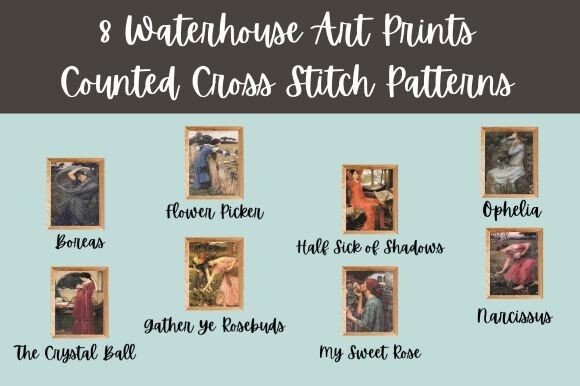
This specific collection distills eight of his most iconic compositions into stitchable formats:
- Narcissus Half Sick of Shadows: A study in melancholy and reflection.
- The Lady of Shalott: A narrative of isolation and destiny.
- The Crystal Ball: An exploration of mysticism and the unknown.
- Flower Picker: A celebration of pastoral simplicity.
- Ophelia: Perhaps the most famous depiction of Shakespearean tragedy.
- Gather Ye Rosebuds: A visual interpretation of Carpe Diem.
- My Sweet Rose: A romantic tribute to nature's fleeting beauty.
- Boreas: A dynamic portrayal of mythological force.
What sets this collection apart in the current market is its technical versatility. Recognizing that creators have varying levels of expertise and access to different materials, the PDF includes three distinct chart variations: standard symbols, symbols on color, and color blocks. This flexibility ensures that whether a user is a novice seeking clarity or an expert demanding precision, the workflow remains intuitive.
The Convergence of Digital Assets and Physical Creation
The rise of printable PDF patterns like the 8 Waterhouse Cross Stitch Patterns signals a broader shift in the creative industry: the seamless integration of digital convenience with physical output. Historically, acquiring high-quality embroidery charts required visiting specialty stores or subscribing to print magazines. Today, the demand for instant, high-resolution downloads reflects the expectations of the modern consumer who values efficiency without compromising quality.
For entrepreneurs and freelancers, this model offers a compelling case study in digital product design. The ability to offer a single digital file that adapts to four different cloth sizes—ranging from 14-count (29.0 x 35.9 cm) down to 22-count (18.5 x 22.9 cm)—demonstrates a user-centric approach to product development. It acknowledges that a creator might start with a large project and later wish to scale it down for a smaller frame, or vice versa. This adaptability increases the perceived value of the asset and reduces friction in the purchasing decision.
Why Professionals Are Turning to Analog Hobbies
You might wonder why a professional audience, typically focused on technology and scalability, is investing time in counting stitches. The answer lies in the cognitive benefits of "deep work" and the psychological necessity of disconnecting. In a business landscape saturated with notifications and multitasking, activities like cross-stitching provide a structured form of meditation.
Waterhouse's art, with its complex layers and emotional depth, is particularly suited for this purpose. When stitching The Lady of Shalott, the crafter must engage with the narrative, the color palette, and the composition simultaneously. This engagement creates a state of flow, reducing stress and enhancing focus. For marketers and content creators, this translates to a renewed capacity for creative problem-solving. The act of translating a two-dimensional painting into a three-dimensional textile requires a level of spatial reasoning and patience that sharpens the mind.
Trends Driving the Demand for Historical Art Replicas
The popularity of the 8 Waterhouse Cross Stitch Patterns aligns with several macro-trends in the lifestyle and consumer markets. First, there is a growing appreciation for "slow living." Consumers are increasingly rejecting fast fashion and disposable culture in favor of heirloom-quality items that tell a story. A finished Waterhouse tapestry is not just a decoration; it is a labor of love that preserves a piece of art history.
Secondly, the "Maker Economy" continues to expand. Platforms dedicated to sharing handmade goods have created a vibrant ecosystem where unique, artisanal products command premium prices. Entrepreneurs are leveraging this trend by creating custom frames, offering finishing services, or integrating these stitched artworks into home decor brands. The availability of high-quality source material is crucial here; without accurate, detailed charts, the final product would lack the fidelity required to satisfy discerning customers.
Furthermore, the Pre-Raphaelite revival in popular culture—from literature to film adaptations—has kept Waterhouse's imagery at the forefront of public consciousness. As audiences seek deeper connections with the stories behind the art, the tactile experience of recreating these scenes offers a personal connection that viewing a screen cannot replicate.
Practical Applications and Workflow Integration
For those considering incorporating these patterns into their workflow or business, the implications are practical and multifaceted. The inclusion of color block charts is particularly innovative for beginners or those working in low-light environments. This feature simplifies the decision-making process, allowing the stitcher to focus on the rhythm of the work rather than deciphering complex symbols.
Consider the scenario of a small business owner looking to create a line of upcycled home goods. They could purchase the 8 Waterhouse Cross Stitch Patterns, stitch the designs onto high-quality linen, and mount them as wall art. The versatility of the dimensions allows for a diverse product range: larger pieces for statement walls and smaller versions for book covers or journal bindings. The ability to choose between 14, 16, 18, and 22 count fabrics means they can tailor the texture and detail level to match their target market's price point and aesthetic preferences.
Additionally, the educational aspect cannot be overlooked. These patterns serve as excellent teaching tools for art history classes or community workshops. By engaging students in the physical recreation of Waterhouse's work, educators can bridge the gap between historical context and artistic technique, fostering a deeper appreciation for the Pre-Raphaelite movement.
Looking Forward: The Future of Artistic Recreation
As we look toward the future, the distinction between digital and analog will continue to blur. We are moving toward a hybrid model where digital tools facilitate physical creation. The 8 Waterhouse Cross Stitch Patterns exemplify this synergy. They are born from digital files but result in a tangible object that holds cultural weight.
This trend suggests a future where artists and designers will increasingly release their work in multiple formats—digital prints, NFTs, and stitchable patterns—to maximize reach and engagement. For the enthusiast, it means having unprecedented access to world-class art that can be integrated into daily life. For the professional, it offers a new avenue for monetizing intellectual property and connecting with communities through shared creative experiences.
In conclusion, the 8 Waterhouse Cross Stitch Patterns collection is more than a hobby kit; it is a testament to the enduring power of art to inspire and connect. By meticulously recreating Waterhouse's vision stitch by stitch, individuals participate in a legacy that spans over a century. Whether used for personal relaxation, as a centerpiece for a creative business, or as an educational resource, these patterns prove that the romance of the past remains a vital force in our modern world.